Drone technology has tremendous opportunity to enable beneficial applications and stimulate the economy. At the same time, a large number of objects flying over our heads creates very legitimate safety concerns. More regulation to ensure safety, however, this regulation has the potential to be at odds with another important government goal, which is the fostering of innovation. This innovation is necessary for competitive economies. to remain competitive.
To this end, many countries, including Japan, have moved to mandatory registration of UAVs. This move, by itself, does not need to significantly impede innovation. The simple goal of ensuring that proper authorities can identify the owners of the objects flying over us is a reasonable safety objective.
It is important, however, that the details of these registration requirements do not become unnecessarily onerous. For example, requiring a minimal necessary set of identification documents is not particularly difficult. Yet, it is the nature of some institutions to expand these requirements beyond what is necessary. It is important require documents that are universally available, and do not inadvertently discriminate against the type of applicant. For example, favoring corporations over individuals or certain corporate or individual classes over other classes. It is not possible to predict which applicant may be the source of the next important innovative development.
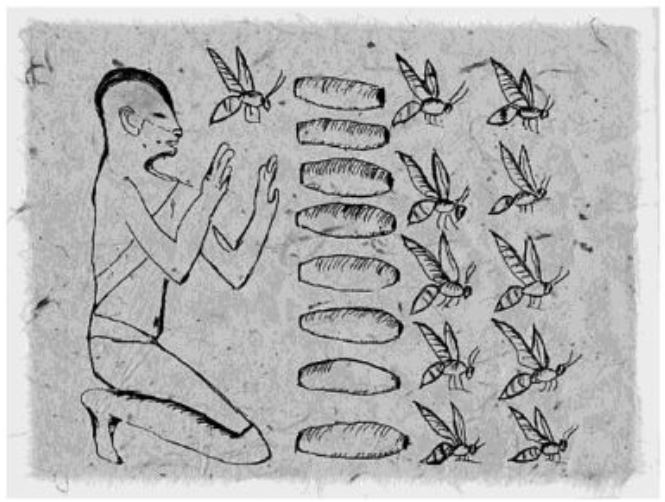
Another important aspect in drone innovation is that aircraft are fungible. Drone multirotor technology supports a wide variety of aircraft types. The ability to adapt aircraft to specific applications is absolutely essential for innovation. We can reference nature to understand. The physical arrangement of an insect, for example, is entirely functional. Much of the anatomy of, say a common honeybee, is specifically adapted to the function. Not just flight, which is one aspect. But even the hairs on its body, the shapes of its legs, its size, are all related to the efficiency and types of pollen and nectar that can be collected. Other insects, such as termites, actually morph. They even grow wings (flight capability) for migration, then lose them when no longer needed. Innovative done development is more like this, than modern aviation development. They are first functional robots, that just happen to fly. This is likely to be a significant mindset challenge for current aviation regulation officials which naturally focus exclusively on airworthiness and flight safety. Without recognition of this difference, simple and reasonably argued restrictions could have a significant dampening effect on innovation.
Administrative resistance to the adaptation of the aircraft itself will naturally cause applications to fit into the currently existing aircraft variants. The natural effect of limiting aircraft modification is the limitation of drone use to applications that already mostly exist. This is the exact opposite of innovation. If this potential were to be reality, then the full capability and impact of drones could never be achieved.
Regulations which satisfy the safety concerns while encouraging the completely new is most consistent with innovation goals, while those that encourage only adaptation of the existing will exhibit retarded growth.